
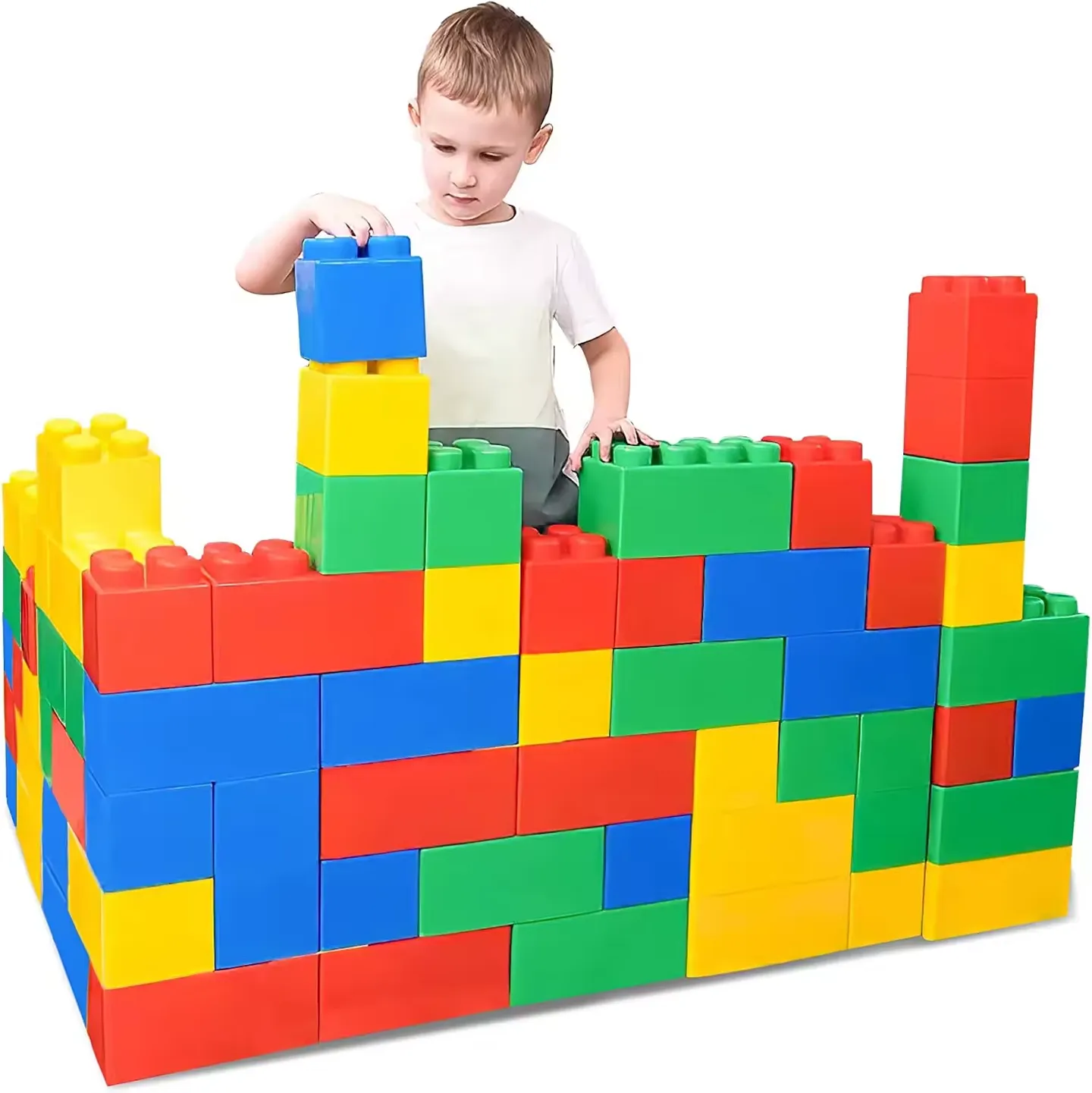
Giant Building Blocks give children the freedom to build big structures while letting their imaginations grow even bigger. Giant Building Blocks can transform a simple play area into a creative world filled with towers, castles, houses, bridges, and exciting pretend environments. With Giant Building Blocks, children can experiment with construction, explore new ideas, and turn simple pieces into impressive creations. Whether used at home, in a classroom, or in a childcare setting, Giant Building Blocks combine hands-on activity with imaginative thinking and meaningful learning.
Why Building Big Matters for Children
Children naturally enjoy making things. When they are given larger construction pieces, they can create structures that feel more substantial and interactive than small tabletop models.
Building on a larger scale encourages children to think about space, stability, proportions, and design. A simple tower can become an imaginary skyscraper, while a collection of blocks can become an entire village.
Encouraging Bigger Ideas
Large construction projects give children room to think creatively. Instead of focusing only on individual pieces, they can consider how several components work together.
This type of open-ended activity encourages planning. Children may first imagine a finished structure and then determine which pieces they need to make their idea possible.
The Creative Power of Giant Building Blocks
Giant Building Blocks are designed for flexible construction. Children can stack, arrange, connect, and rearrange pieces to create structures based on their own ideas.
There is no requirement to build one particular model. A child can create a castle one day and completely dismantle it to build a transportation center the next. For more information about large building blocks for kids, explore their features, benefits, age suitability, and role in encouraging imaginative and educational play.
Turning Ideas Into Structures
Construction allows children to see their ideas become physical creations. This can be a rewarding experience because they can directly observe the results of their decisions.
When something does not work, children can modify their approach. They might strengthen a base, move a piece, or redesign an entire section.
Learning Through Trial and Error
Trial and error is an important part of construction. A structure may collapse because it is too tall or because the foundation is not wide enough.
Instead of treating failure as a problem, children can view it as part of the building process. They learn to test ideas, identify challenges, and try different solutions.
Giant Building Blocks for Imaginative Worlds
Construction play becomes even more exciting when children use their creations as settings for stories.
Building a Fantasy Castle
Children can design castles with towers, gates, walls, and imaginary rooms. Once completed, the structure can become the center of a fantasy adventure.
Children can invent characters and stories involving explorers, friendly dragons, knights, kings, queens, or magical creatures.
Creating a Giant City
A city-building project can involve multiple structures. Children can make homes, shops, hospitals, schools, garages, bridges, and transportation areas.
Giant Building Blocks make it possible to create large environments where children can move around and interact with their designs.
Designing a Space Station
For children interested in science and exploration, a space station can provide an exciting construction challenge. They can create control rooms, launch areas, sleeping quarters, and imaginary laboratories.
This type of project combines imaginative storytelling with basic concepts about space, engineering, and design.
Developmental Benefits of Large-Scale Construction
Large construction activities can support children's physical, cognitive, and social development.
Fine Motor Coordination
Picking up, carrying, positioning, and stacking pieces requires controlled movements. Children develop hand-eye coordination as they carefully place each component.
Although the pieces are large, children still need precision to create stable structures.
Spatial Awareness
Construction introduces children to concepts such as height, width, balance, distance, and position.
They can compare structures, observe how pieces fit together, and understand how changing one part can affect another.
Problem-Solving Skills
Building a large structure requires planning and adjustment. Children must decide where to place pieces and how to make their designs stable.
Giant Building Blocks give children opportunities to solve these problems through practical experimentation.
Building Together and Sharing Big Dreams
Construction can become a collaborative experience when several children participate in the same project.
Developing Teamwork
A large project may require children to divide responsibilities. One child can create the foundation, another can build a tower, while another designs an entrance.
This encourages communication and cooperation. Children learn to listen to different ideas and work toward a shared goal.
Family Building Projects
Parents can join children in creating large structures. The adult can provide encouragement without controlling the design.
A family might spend an afternoon creating a giant castle, imaginary town, or adventure base. Such projects can create opportunities for conversation and shared creativity.
Educational Uses of Giant Building Blocks
Giant Building Blocks can also support informal learning. Parents and teachers can incorporate mathematics, science, language, and art into construction activities.
Exploring Mathematics
Children can count pieces, compare heights, identify shapes, and create patterns. They can also explore simple measurements by determining which structure is taller or wider.
These activities introduce mathematical concepts through hands-on experiences.
Introducing Engineering Concepts
Construction provides an accessible introduction to engineering. Children can explore why certain structures stand while others fall.
Adults can ask questions about foundations, supports, balance, and weight distribution. Children can then test their ideas by changing the structure.
Creating a Building-Friendly Environment
A suitable environment can make large construction more enjoyable. Children need enough open floor space to build and move safely around their creations.
Choosing the Right Surface
A stable floor, carpet, or suitable play mat can provide a comfortable building area. Remove unnecessary obstacles and fragile objects from the immediate construction zone.
Adequate space also allows children to see their creations from different angles.
Organizing Building Pieces
Storage is important when using oversized construction toys. Large bins, shelves, or dedicated containers can help keep pieces organized.
Teaching children to return their Giant Building Blocks after play can also encourage responsibility and create a simple cleanup routine.
Choosing Giant Building Blocks for Different Ages
When selecting Giant Building Blocks, consider children's age, physical abilities, available space, material, piece size, and the number of pieces included.
Younger children may prefer lightweight pieces that are easy to carry and position. Older children may enjoy larger sets that allow them to create more complex structures.
Considering Durability
For home use, parents may prioritize easy handling and convenient storage. Schools and childcare environments may require durable materials that can withstand frequent use.
Always select products appropriate for the intended age group and follow the manufacturer's recommendations.
Keeping Construction Fresh and Exciting
One of the greatest advantages of Giant Building Blocks is that children can reuse the same pieces for countless projects.
Parents can introduce different themes throughout the week. One day could focus on building a castle, another on creating a city, and another on designing an animal habitat.
Setting Creative Challenges
Simple challenges can provide inspiration without limiting children's imagination. Ask children to build the tallest stable tower, create a bridge between two areas, or design a house with multiple rooms.
The challenge should encourage experimentation rather than require a perfect result.
Giant Building Blocks and Storytelling
Building and storytelling can work together to create a deeper play experience. Once children have constructed an environment, encourage them to explain what it represents.
They might describe who lives in their building, what happens inside, or what adventure is about to begin.
Expanding the Story
Children can continue modifying their structures as the story changes. A new character may need a house, a vehicle may require a garage, or an imaginary village may need a bridge.
This creates an evolving play environment that combines construction, language, creativity, and role-playing.
Safety Tips for Big Construction Projects
Safety should always be considered when children are working with large construction pieces. Choose age-appropriate materials and inspect pieces regularly for damage.
Children should have sufficient space to build and should not climb unstable structures unless the product is specifically designed for climbing.
Encouraging Responsible Play
Teach children to carry pieces carefully, avoid throwing blocks, and dismantle structures responsibly. Adult supervision may be particularly important for younger children.
A safe environment allows children to explore confidently while reducing avoidable risks.
Frequently Asked Questions
1. What are Giant Building Blocks?
Giant Building Blocks are oversized construction pieces that children can stack, arrange, connect, and use to create large imaginative structures.
2. What can children build with Giant Building Blocks?
Children can create castles, houses, towers, bridges, cities, forts, garages, animal habitats, space stations, and many other imaginative designs.
3. Do Giant Building Blocks support learning?
Yes. Construction play can encourage problem-solving, coordination, spatial awareness, planning, creativity, early mathematics, engineering concepts, and communication.
4. Can children build together with Giant Building Blocks?
Yes. Collaborative construction allows children to share materials, communicate ideas, divide tasks, solve problems, and work toward a common creation.
5. How can parents encourage bigger creative projects?
Parents can provide open floor space, introduce imaginative themes, ask creative questions, and encourage children to build larger structures without requiring them to follow a fixed design.
Conclusion
Giant Building Blocks encourage children to think creatively, build confidently, and turn ambitious ideas into physical creations. From towering castles and imaginary cities to bridges, space stations, and adventure bases, oversized construction pieces provide countless opportunities for imaginative play. They also support important developmental skills such as coordination, spatial awareness, problem-solving, communication, teamwork, and early STEM learning. By providing a safe building environment and allowing children to experiment freely, parents and educators can encourage young builders to dream bigger while learning through hands-on discovery. The result is more than a collection of blocks; it is an open-ended invitation to imagine, design, build, rebuild, and create something uniquely their own.